A Burn & Brew Ritual for Safety in Uncertain Times
In my book Burn & Brew Rituals: Incense Blends and Cozy Drinks for Balance, Healing, and Inner Peace, I share a practice built on a simple premise: the body listens to the world through the senses long before the mind understands it.
A curl of smoke. A warm cup in the hands. A repeated moment that asks nothing of you. These ordinary gestures become orientation points—small places the spirit returns to when life grows larger than language.
When I created this daily grounding practice, I did not know I was also developing a survival strategy.
There are days when the atmosphere feels different. Nothing visible has happened in your immediate surroundings, yet people move carefully around each other. Conversations pause where they once flowed. Sleep becomes thin, restless, and easily broken. The hand reaches for the phone before the eyes have fully opened.
Recently the news carried reports of military strikes and widening conflict. The body hears them in a language older than understanding—a subtle tightening, a listening posture, a readiness without an object.
Around the same time, my doctor spoke the words, "breast cancer." The room did not spin; it narrowed. Sound receded to the edges. Time slowed just enough for the body to begin preparing for something unnamed. Before thoughts formed, a quiet internal command had already been issued: Stay alert.
I have spent years helping others soften their breathing and settle their energy. Yet in that moment there was no wisdom, no graceful perspective. Only a small and very human question: Why me?
Then the outer world grew louder; analysis, speculation, urgency carried through every conversation. The personal and the collective met inside my heart chakra, and my body did not distinguish between them. It simply remained awake.
We often imagine we can separate our concerns: private concerns in one place, world events in another. But the nervous system keeps a single ledger.
Uncertainty registers as one experience, whether it arrives through a diagnosis, a headline, or a sudden shift in the emotional tone of a room. The body does not analyze the source. It listens for safety.
When safety cannot be confirmed, it waits.
Waiting has a texture. Shallow breath. Tightened muscles. Circular thoughts around futures that don't yet exist.
Nothing is actively wrong in the moment, yet rest does not arrive.
In this state, reassurance offered in words passes through us like wind through a screen door. The body does not respond to explanation. It responds to experience. So, we offer it one.
Ritual is not an escape from reality. It's a return to sequence.
When life becomes unpredictable, the spirit looks for pattern: a small reliable moment that repeats unchanged. A flame that lights the same way. A fragrance that arrives the same way. A cup that warms the hands the same way. In repetition, the body remembers continuity.
Though this matters deeply for everyone, it penetrates even more so for healers and caretakers. When you are accustomed to being the steady presence for others, disruption lands in unfamiliar terrain. The identity itself trembles. The question beneath the question emerges: Who holds me when I am the one shaken?
The answer is often quieter than expected. We begin by holding a moment and choosing gentle signals.
During times of vigilance, the body does not need stimulation. It needs permission to stand down.
Frankincense offers this softly. Its aroma widens the breath without asking effort. The exhale lengthens on its own, and with it the body loosens its listening posture.
Warm sweetness follows. Oats and honey speak the language of sufficiency. Rose reminds the heart it does not need to close in order to endure.
These messages, not treatments. The body hears: for now, nothing is required.
Night is the proper hour for such a conversation. Morning gathers us toward the world; evening returns the world from our shoulders.
The Burn & Brew Ritual
Begin by allowing the day to end gradually. Turn away from the steady stream of updates and voices. Let the room grow dim enough that your eyes no longer search for detail.
Burn
Place a small piece of frankincense on heated charcoal.
Watch the smoke as you would watch weather: without interpretation or judgment.
Rest a hand on your chest and breathe as you naturally do. No technique, no correction. Let the moment be uneventful.
Brew
Warm together in a saucepan:
- 1 cup oat milk, to anchor the body into steadiness
- 1 tsp culinary rose or ½ tsp rose water, to soften emotional contraction
- 1 tsp honey, to signal sufficiency
- A pinch of cardamom for warmth, to cue rest
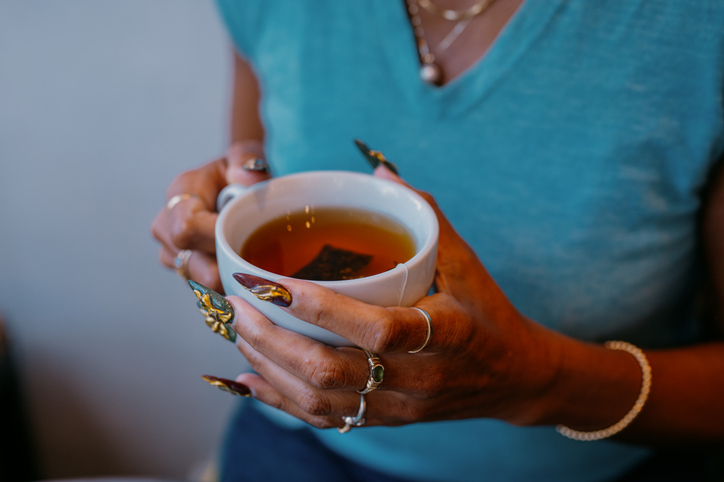
Hold the cup before drinking. Notice the quiet weight of it. Heat enter the palms often reaches the nervous system faster than words.
Sip slowly.
Nothing needs to be achieved while drinking. The body learns from the absence of demand.
Rest
Sit for several minutes. If thoughts begin constructing tomorrow, gently answer: Not yet. Return to the warmth in the hands or the fading thread of fragrance in the air.
What Changes
After a few minutes, something subtle shifts. The breath settles into its lower range. The jaw releases a just a bit. The mind loosens its rehearsal of the future.
No event has changed, yet the body stops bracing against events that have not arrived.
This is resilience in its quieter form. Not conquering uncertainty but declining to live inside it prematurely.
My diagnosis remains. The world remains unsettled. But I am no longer attempting to live in every possible tomorrow at once.
From this space, information is heard clearly. Conversations are kinder. Even sleep approaches without negotiation.
We do not need certainty in order to live. We need intervals of felt safety. Ritual creates those intervals.
The Quiet Work of Staying Human
There is a kind of strength that rarely announces itself. It does not shoulder uncertainty or conquer the future with certainty. It does not arrive in dramatic moments of courage. It lives in the quieter act of remaining present while the unknown unfolds.
Illness asks this of us. So do times of conflict. So does living in an age when information travels faster than understanding. The mind races ahead, attempting to predict, rehearse, and prepare. Yet the body remains here, waiting for a signal that it may soften. Here: in the chair, in the room, in the simple rhythm of breath. Ritual offers the signal.
Not because it changes the course of events, but because it changes the atmosphere within which we meet them. When the senses recognize warmth, scent, and repetition, something ancient in us remembers how to stand down from vigilance. The nervous system loosens its grip on imagined futures and returns to the only place restoration has even been possible; the present moment.
A warm cup cradled in the hands. Smoke rising with no urgency. Breath moving without instruction. Small things easily overlooked, yet these are the experiences that re-teach the body trust.
This is the quiet promise beneath daily rituals: that transformation often arrives not through intensity, but through rhythm. Through returning again and again to a gentle practice until the body believes what the mind cannot yet prove—that safety can exist even while life remains uncertain.
This is a widening of reality. We allow room for tenderness alongside vigilance, for rest alongside responsibility, for spirit alongside circumstance.
If, tonight, a single muscle softens…If the breath deepens without effort…if sleep comes a little closer, then the ritual has done its work.
You have reminded your body that existence is larger than fear's predictions. And from that remembering, tomorrow becomes inhabitable. Not controlled. Not guaranteed. But lived.
So we tend the flame. We warm the cup. We sit inside the moment we are given.
Peace is rarely delivered by the world all at once. More often, it is cultivated. One breath at a time. One day at a time. Until the nervous system trusts life again.

About Rhonda Kuykendall-Jabari
Related Products

is subject to certain Terms and Conditions