

 New Worlds of Body, Mind & Spirit Since 1901
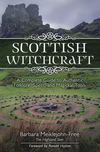
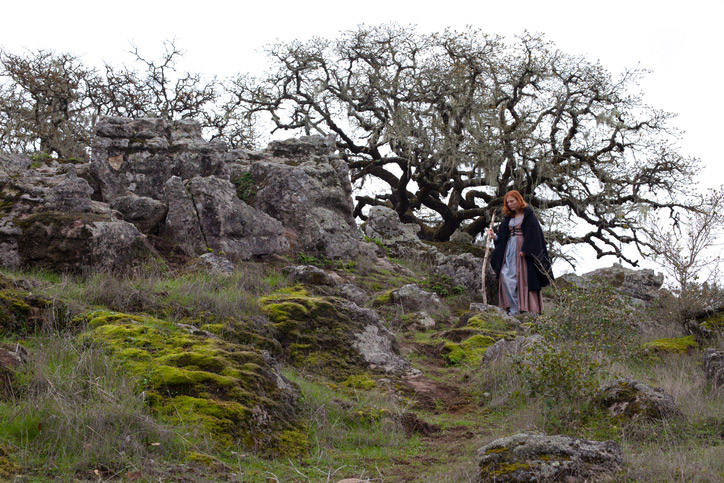 In the old Highland folkcraft ways, magickal protection arose from deep knowing and ancestral remembrance, from standing as one with the land as kith and kin, held in right relationship with the genius loci. Imagine you are standing on the highest mountain top in the Highlands of Scotland. You feel the caress of the wind speaking to you in its own language. You feel anchored and grounded in the ancient, weathered soil beneath your feet, alive with ancient memory. There are no borders here, no straight lines, nor edges imposed by human hand, only the presence of power and place within the Highlands. You lift your arm with respect, extending the power finger, the index, just before the heart, and begin to stand the Caim by slowly tracing a circle around your body in the air. The movement is sunwise, following the natural turning of life and magickal protection within Scottish witchcraft, allowing the boundary to be shaped through intention, breath, and right relationship rather than force. The Caim, a protective invocation, is the act of naming your place within the land and standing there in right relationship, a quiet recognition of belonging that aligns your body, breath, and spirit with the living presence that holds you, so that magickal protection arises naturally from harmony rather than force. The wind shifts and the world settles. You feel yourself arriving in your body, in this moment, and into a living relationship with all that surrounds you, as if the ground itself has acknowledged your presence and drawn you quietly into its keeping. There is no forcing and no refusal. You stand, you breathe, and belonging unfolds within and without. Magickal protection is born when the land acknowledges your presence, emerging effortlessly and without summons. The Witchblood of the Highlands I did not learn these things from books or from words written down, because I was gifted with dyslexia, so the only thing I could do was go into my inner knowing. Swein MacDonald recognised the ability of second sight within me of being able to work with the old magick, where spells were worked without ceremony and charms were spoken as naturally. My Auntie Barbara and my Granny Winnie held the old ways, as well, with ease and certainty, and later Swein taught me how to stand in my power without drawing the eye, how to be present without being exposed. It was the craft of the old ways, practical and embodied, rooted in timing, awareness, and the living land itself, a knowing that took hold of me early on in my life and never left me. In the Highlands, magickal protection was not set apart from daily living. It was woven into the ordinary rhythms of life, held in how you moved through the day, how you crossed each threshold, how you kept your home, and how closely you listened to the land beneath your feet, so that protection was not something begun in response. Still, something quietly sustained through connection with source. Highland folkcraft stands apart from what is often called psychic protection today, because it begins from an entirely different way of understanding the world. Modern approaches tend to turn inward, focusing on shielding, guarding, and blocking, as though harm is assumed and the response must be a barrier raised solely in the mind. The old Highland ways did not work from that premise at all. The question was never what might harm me. The inquiry was where do I stand, who and what holds me, and how do I remain in right relationship with that care. From that knowing, protection emerged naturally, not as defence, but as belonging, placement, and accord with the living land itself. In the old ways, a person was never understood as separate from land, body, ancestry, or place. Each was woven into the other, and protection that did not honour those bonds was always partial, always thin. Magick was required to live in matter, to settle into flesh, stone, and breath, rather than existing only in imagination, because what is lived is what endures. And that is the difference. When magickal protection is rooted in land and relationship, it carries weight and substance. When that depth of understanding is joined with psychic protection, where imagination, vision, and inner sensing are consciously engaged, the work becomes whole. One anchors the body and the soul in the living world, the other extends awareness beyond it. Woven together, they create a field of magickal protection that is both grounded and far-reaching, resilient because it is lived, and potent because it is consciously shaped. Highland folkcraft begins with magickal protection as a way of living rather than a mental practice. Protection is enacted rather than imagined. It lives in the body and moves through water and stone, through gesture and breath, through the plants that grow where you live and the quiet intelligence of presence itself. It does not tax the nervous system through constant vigilance. It settles the body into coherence and rhythm, allowing protection to become a state of being, held through relationship with the living world rather than sustained solely by watchfulness. At the heart of that coherence stands the Caim, quiet and enduring. To stand the Caim is to recognise your edges and your presence at the same time, to give the body permission to take up space without apology. Within Highland folkcraft, the Caim was not fixed to a single form. It might be walked slowly upon the earth, traced in the air with a finger, spoken under the breath, or drawn into being through breath alone. Often it was shaped at dawn or at dusk, those liminal hours when the land itself seems to hover between worlds, and listening feels mutual. The Caim was never concerned with exclusion. Its power lies in alignment, in right placement within what already lives and breathes around you. For many people, particularly those carrying ancestral memory of displacement, scrutiny, or long watching, standing the Caim brings an immediate settling. Something ancient in the body recalls how to stand without shrinking or dispersing. The self gathers, not by force, but by remembrance, and steadiness returns as a natural state rather than something that must be maintained. When the Land Answers Back Hills, stones, lochs, weather, and seasons were never passive scenery. They were companions in the craft, aware and responsive, shaped by centuries of relationship. Magick happened along paths worn by generations of feet, at field edges where worlds brushed against one another, beside water that carried memory, and on high ground where the wind could witness a person's standing and carry it outward. Many people feel something stir the moment they step onto Scottish soil, even if they cannot name it. The Highlands are alive with presence, not in a romantic sense, but in a lived and enduring way. To stand there is to enter a living field of awareness that has learned how to hold, test, and respond to those who walk upon it. The power of Presence is noticed, and the right Relationship with the land matters. When natural tools were used, they were never treated as sources of power in themselves. They extended the body and sharpened awareness. A staff was a companion rather than an instrument, a grounding rod and a marker of presence. To walk with a staff was to walk attentively, feeling the land answer each step. To stand the Caim with a staff was to seat that boundary more deeply into the earth, allowing hand, body, and place to meet and speak together. Nothing was imagined into being without form. Magick lived where feet met ground, where breath met weather, where the body learned how to belong. It serves as a marker of intention and relationship, linking the witch, the land, and the unseen, and is used to claim, define, or hold a working space with purpose rather than force. And in the old craft, what stood upright in the ground was not simply a staff. The moment a naturally forked branch was chosen, its split crown opening like a V toward the sky, it crossed into a different category of meaning altogether. That forked form marked it as a point of balance and meeting, no longer just a pole, but something shaped by both land and purpose. A stang is a ritual staff or pole used in traditional witchcraft and old folkcraft, defined by its naturally forked top, often cut from thorn, and used to mark intention, boundary, and relationship between earth and the unseen. The stang carried a different quality, a different kind of authority. When a stang was driven into the earth, it marked intention, named territory, and shaped a sacred working space, quietly declaring that this place mattered and that a boundary had been set. Swein taught me that tools were never the source of power; they were only expressions of it when truly needed. What mattered far more was whether I could arrive fully, without distraction, without performance, without reaching outward for something to make the moment real. Again and again, I was sent outside with empty hands, not as a denial of craft, but as a return to its root. I was taught to stand on the land and to stand correctly, to feel my own weight settle, to allow my breath to slow until I was no longer rushing ahead of myself. Many years later, I found myself repeating that same lesson with Edd MacGaa Eagle Man, my Lakota teacher. Again and again, he would have me dismantle and rebuild the sweat lodge, not as a test of endurance, but as a way of stripping away assumptions. Each time I thought I had understood, he asked me to begin again, until the act of building was no longer about technique, structure, or getting it right, but about presence. Only when I could arrive without forcing, without trying to impose my will, did the lodge begin to take its proper shape. The teaching was the same one I had been given years before, carried through a different land and a different tradition. The power did not come from the lodge itself, nor from the poles or the coverings, but from the quality of relationship brought to the act. When that relationship was right, the lodge stood as it should, and only then could the ceremony begin. Presence was everything. Not the idea of being present, but the lived reality of it, the moment when the body stops skimming and truly arrives. When that happened, the land responded not as a reaction but as recognition. The ground beneath the feet began to feel different, more attentive, as though it had turned its face toward me. The air carried a thickness, a listening quality, and the subtle boundary between myself and the world softened without dissolving. I was taught that the natural world does not need to be summoned or commanded. It responds to the relationship. When a person stands quietly enough and honestly enough, the land knows who is there. Stones, trees, wind, and soil all have their own awareness, and they respond to those who approach without pretence. No spoken words or gestures were necessary. The act of standing, of being willing to be seen and felt by the land, was already an offering. In that way, magick was never something added onto the world. It arose from alignment, from the simple truth of being where one was, entirely and without separation. Tools could come later, if they were needed at all, but they were never the beginning. The beginning was always the same. Stand on the land. Arrive. Let the world recognise you. Over time, I learned that a finger can serve where a staff once stood, that a single breath can do the work of a stang or staff, and that awareness itself can open what ceremony once shaped. Objects may help the body remember, but they are not where the power resides. Magickal protection lives in relationship, in presence, and in the quiet meeting between land and being, where nothing needs to be forced to get the work done. Saining as Sacred Protection A home might be sained when its atmosphere feels unsettled, after illness, conflict, or the passing of many feet through its doors. A child might be sained before sleep so their body and spirit could rest safely within their own skin. A traveller might be sained before a journey, not to guard against imagined dangers, but to ensure they moved through the world held in right relationship as they crossed from one place into another. In each case, protection came through ordering rather than exclusion. Saining worked through elemental means that carried the authority of place. Smoke, water, breath, and quiet words were used according to season and circumstance. Juniper was among the most trusted plants, its sharp, resinous smoke clarifying space and settling disarray. Rowan was deeply protective, gathered with respect, and often used where lineage, children, or thresholds were concerned. Heather brought a gentler quality, particularly within the home, while bog myrtle carried an older grounding presence linked to liminal land and deep memory. Even peat smoke, familiar and steady, could be used to restore balance and containment. Water played an equal role in magickal protection. Source water, Spring water, rainwater, or water drawn from a well might be lightly flicked at doorways, hearths, beds, and bodies, often with a sprig of rowan or heather or coarse salt. Words were spoken softly or held inwardly, never performed. The effectiveness of the act lay in timing, attention, and relationship rather than force or display. Saining is protected by tending. It recognised that life leaves impressions and that those impressions must be cared for if harmony is to be maintained. Through smoke, water, and presence, order was restored and boundaries strengthened. Space remembered how to hold. The body settled. The field of protection renewed itself through relationship rather than resistance. In this way, saining was both blessing and protection, woven into daily life as an ongoing act of care, ensuring that people and places remained aligned, held, and whole within the wider rhythms of land, season, and spirit. When the Land Became My First Teacher At my Auntie Barbara's croft, blackthorn and hawthorn wrapped the land in a living boundary that needed no explanation. Crossing into that space, something in the body shifted immediately. The air felt held. The ground seemed to respond. The land itself acknowledged your presence, not dramatically, but with a steady certainty that told you how to move and how to behave. Blackthorn stood first, fierce and unyielding, teaching clarity through consequence. It grew where decisions mattered, asking for discernment and honesty rather than force. Hawthorn followed, holding the threshold with enchantment rather than warning, its authority quiet and unquestioned, a keeper of liminal ground where worlds brushed close. Beyond them, Heather endured the exposed hills, carrying the knowledge of resilience and recovery. It showed how protection could be sustained over time, not by hardening, but by remaining intact through prolonged exposure to weather. Thistle rose along edges and uncertain footing, embodying sovereignty without aggression, teaching the body how to know its place and honour the standing of others. None of this was symbolic in the way books would later describe. It was lived. The land spoke through what it grew, and I learned by paying attention. Protection was not something you did. It was something you entered into, a relationship with thorn and wind, with root and stone, with the quiet authority of a place that knew how to hold itself. That was how the Highlands taught me magick, not through instruction, but through presence, until the land itself became the teacher and the lesson could no longer be separated. So much of what is called protection in modern practice begins in anticipation, in bracing for what might arrive. The old Highland ways arose from a different knowing altogether. Magickal protection was never about standing against the world, but about learning how to stand within it. It grew from recognising where you are held, how you are held, and how to enter into a living covenant with land, plants, weather, and presence, allowing protection to arise through relationship rather than effort. When that knowing is lived, magickal protection becomes the ground from which all other forms of protection take their meaning. Psychic awareness, wards, bindings, and boundaries find their proper place when they are anchored in the body, in land, and in lived relationships rather than existing in isolation. Woven together, they create a field of protection that is steady, responsive, and whole. Once you truly know where you stand, protection is no longer something you seek or assemble. It becomes something you live, threaded through each step you take, each boundary you recognise, each breath you return to the world that holds you. That is the living heart of Highland magickal protection, a way of life that shapes how power is carried and how the craft continues to endure for those willing to listen with the body and walk the land with awareness. Ceud mìle fàilte oirbh, A hundred thousand welcomes to you. |
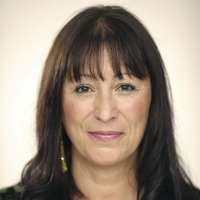
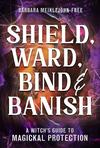
Barbara Meiklejohn-Free was born and raised in the Highlands of Scotland and is internationally known as the Highland Seer. She is a bestselling and award-winning author who wrote Scottish Witchcraft and cocreated numerous ...