

 New Worlds of Body, Mind & Spirit Since 1901
 Okay, I don't really have five favorite deities. Seriously how could you possibly just pick five? Not to mention that my favorites change with the seasons, my moods, and my needs. There are, however a few deities that I tend to come back to more often than most, or with whom I feel a stronger connection, so let's talk about them. It's worth noting that different people have different perceptions of various deities, and connect with them in ways that may not look the same. For instance, Apollo might appeal to musicians for his associations with music, and with those in the medical field or dealing with illnesses for his healing skills. Most deities have many sides, and it is definitely worth taking a deeper look—which I'll get into here; see if the ones I mention have an aspect that appeals to you, too. Let's do this in alphabetical order, just to make sure I don't offend any gods… Bastet is one of my favorites, in part because of her connection to cats. I am officially a crazy cat lady (I have five, yes, I know that's a lot, shush now), so I have always been drawn to Bastet in her role as patron goddess of cats. But her influence goes well beyond just the feline world. Bastet is associated with love, fertility, joy, magic, music, and protection. She is especially protective of the household and wards off disease, which I am very appreciative of during flu and Covid season, plus she protects women and children in addition to cats. Bastet also guards the spirits of the dead as they travel to the Underworld, so I have a statue of her on the altar in my bedroom that is dedicated to all the cats I've lost since I moved into my house. Next up is Brigid, who is the Celtic goddess of fire, healing, and inspiration, among other things. She is often celebrated at Imbolc, in early February, so I associate her with the (faint, quiet, distant) hope of spring's return, and the sun, which is one of her symbols. Because I am an author, always in need of inspiration, I connect with her for a creative boost. In addition, because I deal with chronic illnesses, I call on her for her aspect as healer. Brigid has always seemed to me like a warm and loving goddess, one who brings with her light and healing and music, and I often put her on my spring altar to help those qualities to grow and blossom in my life with the returning of the light. We don't want to forget the gods, of course. Another favorite of mine is Cernunnos, who is sometimes called the God of the Wild Things. I especially appreciate his connection with nature, with animals and forests and primal power. To me, he represents the divine masculine, and is a good balance to my sometimes goddess-heavy practice. Because I live in a rural area, I can feel his wild energy all around me, and I like to call on him to tap into that energy when the world of human beings gets overwhelming or too heavy. When I see a deer walking through my yard, or a hawk soaring overhead, I feel the touch of Cernunnos, and thank him for his blessings, and for helping me to connect to the wild, untamed land around me. And then there is Diana. Diana is the Roman goddess of the moon, magic, hunting, the wilderness, and yes, witches. I love to stand out under the full moon and simply gaze upon her glory, and it is then that I feel my connection with Diana the most powerfully. Strong and independent, this goddess is an inspiration to all witches, but especially those who want to connect to a fierce divine feminine energy. Diana has always been known for her connection to magic and witchcraft, and so I find her to be the perfect goddess to represent that aspect of my life, which is so important to me. When I need to feel empowered, either in my magical work or my mundane life, all I need to do is stand under the moon (no matter which phase it is in) and call Diana's name. I know she is there. Last, but certainly not least, is Hecate, who is one of the deities with whom I have always connected the most strongly. Hecate is another goddess who is associated with witches and magic, as well as crossroads, the Underworld, and death. She is not a gentle goddess, nor one who you should expect to make you feel warm and cozy. Unlike most goddesses, who you would normally call on at the time of the full moon, Hecate is more likely to be invoked at night, during the dark moon. She is a goddess who is more comfortable with the darkness than the light. She is found in the liminal spaces where things meet—the passageways between worlds, and most especially crossroads. Hecate is a good goddess to call on when you are going through a time of change, and find yourself at your own crossroads and in need of guidance. But don't expect her to coddle you and tell you everything will be fine. She's a lot more likely to kick your butt until you get a move on in the direction you need to go. (Apparently that's something I need, or she wouldn't be the goddess I connect to, I suppose.) Hecate is often portrayed as a crone goddess, but she is also sometimes depicted as a triple goddess, encompassing maiden, mother, and crone. She is ancient wisdom, wild energy, regeneration, travel, and vengeance. Try her patience at your own risk. But there is much to be gained from connecting with her, if you do so with respect and a willingness to embrace her wisdom. Perhaps I like her so much because, although she is most often shown with black hounds, she is also associated with the form of a black cat. These deities are at the heart of my own personal practice, but every witch will likely seek their own path, and the gods and goddesses who will accompany them as they walk it. If you're not sure who you are drawn to, you might want to start with whichever of these five appeals to you the most. Or simply ask the universe which deity you need right now, and see who answers. |
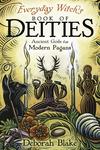
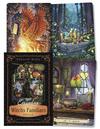
Deborah Blake is the author of nineteen books on modern Witchcraft, including The Eclectic Witch's Book of Shadows, The Little Book of Cat Magic, and Llewellyn's Little Book of Spellcraft, as well as the acclaimed Everyday ...