

 New Worlds of Body, Mind & Spirit Since 1901
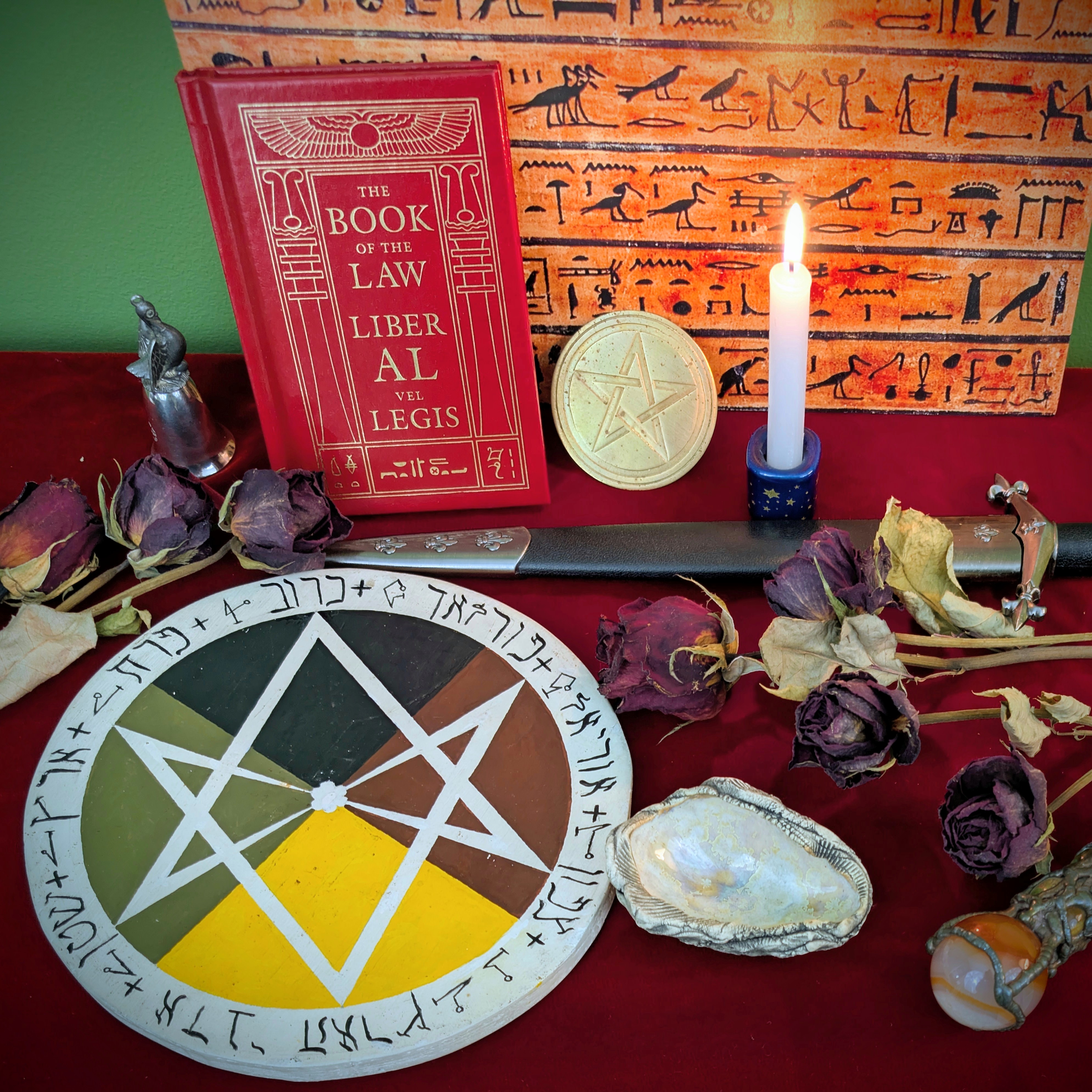
Thelemic Altar; Image Courtesy of Author Maevius Lynn. You step inside a room transformed with the dancing glow of candles, perfumed by swirling incense, and adorned with the emblems of the season. Sights, sounds, and symbols awaken your imagination. Ritual chanting and prayer take you deeper into the moment and stir some distant yet familiar feelings. It's easy to feel the magick of a holiday surrounded by symbols and sensations that connect you to something deeper. Stepping into a celebration is your invitation to step outside of the mundane. It's an opportunity to connect to something beyond yourself. How do people celebrate the times of the year and the times of our lives? This ...
No one really teaches you how to read a magical text. In school, you are taught how to read to gain knowledge and process facts. You learn how to extract information, summarize ideas, and read with efficiency. You also may even be taught how to read for pleasure, discovering how to lose yourself in a story or follow a concept to its conclusion. But there's another way of reading, one that rarely gets named, let alone taught. And that is reading as a form of magical practice. In a modern world governed by short-form content, soundbites, and endless To Be Read lists, the desire for efficient consumption of facts and information is at an all-time high. People, myself included, keep track ...
So you've decided you want to do magic? Great, join the multitude. Human beings have been making magic for at least fifty thousand years, and probably much longer. The oldest cave paintings in which the ritual dances of shamans are depicted only date back around fifty millennia, so that's as far into the past as the actual physical evidence of magical practice extends, but in my opinion we could double this span of years and still not reach the roots of magic. Before Mohammed met the angel Gabriel, before Jesus Christ was crucified, before Moses saw the burning bush, before the Mysteries of ancient Greece and Egypt were whispered in the temples, before the clay tables of Babylon were ...
Words have a power sometimes hidden in their pronunciation, in the idea they refer to, or in their etymology. Theurgy is a perfect example of this. This "divine work" embodies a tradition that goes back hundreds of years to the sacred land of Egypt. More broadly, this spiritual school initiated famous figures such as Iamblichus, Proclus, and Emperor Julian, among others. This lineage spread to Syria, Turkey, Greece, Italy, and even to France and England. But experiencing the Middle East, and more precisely Egypt, has remained the ultimate goal of many theurgists, as it is where this tradition first began. The desire to experince Egypt was also the case for me many years ago. This ...